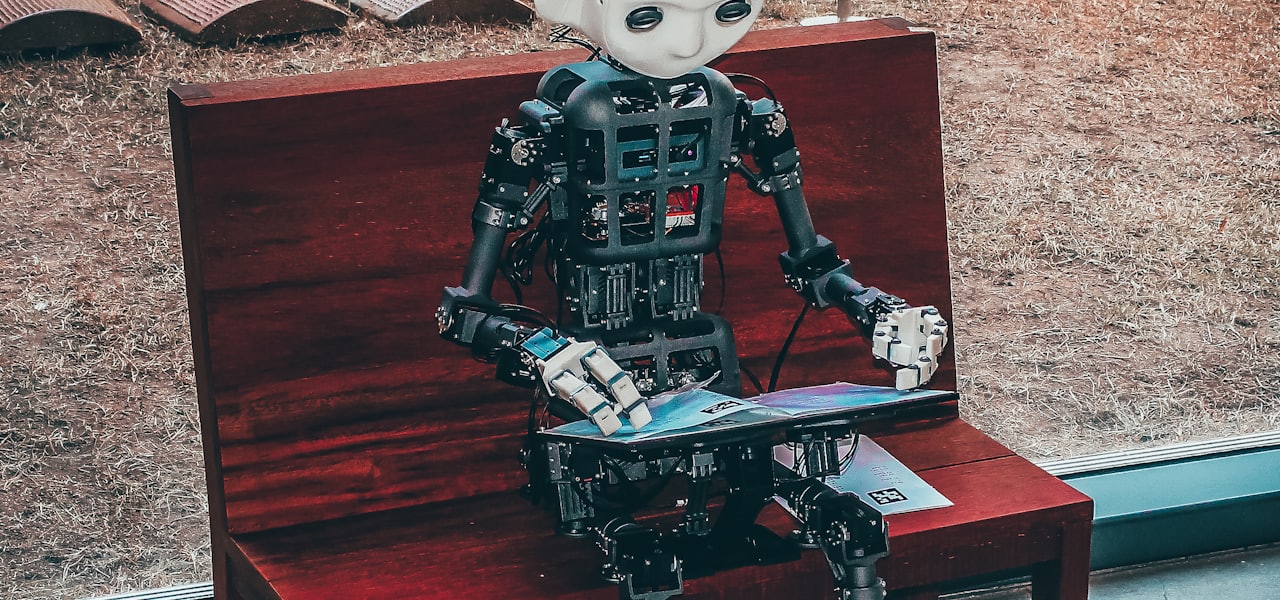
Brain technology, or self-learning know-how systems, defines a technology that employs latest findings in neuroscience. [see also neuro implants] The term was first introduced by the Artificial Intelligence Laboratory in Zurich, Switzerland, in the context of the Roboy project. Brain Technology can be employed in robots, know-how management systems and any other application with self-learning capabilities. In particular, Brain Technology applications allow the visualization of the underlying learning architecture often coined as "know-how maps". == Research and applications == The first demonstrations of BC in humans and animals took place in the 1960s when Grey Walter demonstrated use of non-invasively recorded encephalogram (EEG) signals from a human subject to control a slide projector (Graimann et al., 2010). Soon after Jacques J. Vidal coined the term brain–computer interface (BCI) in 1971, the Defense Advanced Research Projects Agency (DARPA) first starting funding brain–computer interface research and has since funded several brain–computer interface projects. That market is expected to reach a value of $1.72 billion by 2022. Brain–computer interfaces record brain activity, transmit the information out of the body, signal-process the data via algorithms, and convert them into command control signals. In 2012, a landmark study in Nature, led by pioneer Leigh Hochberg, MD, PhD, demonstrated that two people with tetraplegia were able to control robotic arms through thought when connected to the BrainGate neural interface system. The two participants were able to reach for and grasp objects in three-dimensional space, and one participant used the system to serve herself coffee for the first time since becoming paralyzed nearly 15 years prior. And in October 2020, two patients were able to wirelessly control an operating system to text, email, shop and bank using direct thought through the Stentrode brain computer interface (Journal of NeuroInterventional Surgery) in a study led by Thomas Oxley. This was the first time a brain–computer interface was implanted via the patient's blood vessels, eliminating the need for open brain surgery. Currently a number of groups are exploring a range of experimental devices using brain–computer interfaces, which have the potential to fundamentally change the way of life for patients with paralysis and a wide range of neurological disorders. These include: as Elon Musk, Facebook, and the University of California in San Francisco. The systems. This technology is also being explored as a neuromodulation device and may ultimately help diagnose and treat a range of brain pathologies, such as epilepsy and Parkinson's disease.
Imieliński–Lipski algebra
In database theory, Imieliński–Lipski algebra is an extension of relational algebra onto tables with different types of null values. It is used to operate on relations with incomplete information. Imieliński–Lipski algebras are defined to satisfy precise conditions for semantically meaningful extension of the usual relational operators, such as projection, selection, union, and join, from operators on relations to operators on relations with various kinds of "null values". These conditions require that the system be safe in the sense that no incorrect conclusion is derivable by using a specified subset F of the relational operators; and that it be complete in the sense that all valid conclusions expressible by relational expressions using operators in F are in fact derivable in this system. For example, it is well known that the three-valued logic approach to deal with null values, supported treatment of nulls values by SQL is not complete, see Ullman book. To show this, let T be: Take SQL query Q SQL query Q will return empty set (no results) under 3-valued semantics currently adopted by all variants of SQL. This is the case because in SQL, NULL is never equal to any constant – in this case, neither to “Spring” nor “Fall” nor “Winter” (if there is Winter semester in this school). NULL='Spring' will evaluate to MAYBE and so will NULL='Fall'. The disjunction MAYBE OR MAYBE evaluates to MAYBE (not TRUE). Thus Igor will not be part of the answer (and of course neither will Rohit). But Igor should be returned as the answer. Indeed, regardless what semester Igor took the Networks class (no matter what was the unknown value of NULL), the selection condition will be true. This “Igor” will be missed by SQL and the SQL answer would be incomplete according to completeness requirements specified in Tomasz Imieliński, Witold Lipski, 'Incomplete Information in Relational Databases'. It is also argued there that 3-valued logic (TRUE, FALSE, MAYBE) can never provide guarantee of complete answer for tables with incomplete information. Three algebras which satisfy conditions of safety and completeness are defined as Imielinski–Lipski algebras: the Codd-Tables algebra, the V-tables algebra and the Conditional tables (C-tables) algebra. == Codd-tables algebra == Codd-tables algebra is based on the usual Codd's single NULL values. The table T above is an example of Codd-table. Codd-table algebra supports projection and positive selections only. It is also demonstrated in [IL84 that it is not possible to correctly extend more relational operators over Codd-Tables. For example, such basic operation as join is not extendable over Codd-tables. It is not possible to define selections with Boolean conditions involving negation and preserve completeness. For example, queries like the above query Q cannot be supported. In order to be able to extend more relational operators, more expressive form of null value representation is needed in tables which are called V-table. == V-tables algebra == V-tables algebra is based on many different ("marked") null values or variables allowed to appear in a table. V-tables allow to show that a value may be unknown but the same for different tuples. For example, in the table below Gaurav and Igor order the same (but unknown) beer in two unknown bars (which may, or may not be different – but remain unknown). Gaurav and Jane frequent the same unknown bar (Y1). Thus, instead one NULL value, we use indexed variables, or Skolem constants . V-tables algebra is shown to correctly support projection, positive selection (with no negation occurring in the selection condition), union, and renaming of attributes, which allows for processing arbitrary conjunctive queries. A very desirable property enjoyed by the V-table algebra is that all relational operators on tables are performed in exactly the same way as in the case of the usual relations. === Conditional tables (c-tables) algebra === Example of conditional table (c-table) is shown below. It has additional column “con” which is a Boolean condition involving variables, null values – same as in V-tables. over the following table c-table Conditional tables algebra, mainly of theoretical interest, supports projection, selection, union, join, and renaming. Under closed-world assumption, it can also handle the operator of difference, thus it can support all relational operators. == History == Imieliński–Lipski algebras were introduced by Tomasz Imieliński and Witold Lipski Jr. in Incomplete Information in Relational Databases.
Hugging Face
Hugging Face, Inc., is an American company based in New York City that develops computation tools for building applications using machine learning. Its transformers library built for natural language processing applications and its platform allow users to share machine learning models and datasets and showcase their work. == History == === Founding === The company was founded in 2016 by French entrepreneurs Clément Delangue, Julien Chaumond, and Thomas Wolf in New York City, originally as a company that developed a chatbot app targeted at teenagers. The company was named after the U+1F917 🤗 HUGGING FACE emoji. After open sourcing the model behind the chatbot, the company pivoted to focus on being a platform for machine learning. === AI boom === On April 28, 2021, the company launched the BigScience Research Workshop in collaboration with several other research groups to release an open large language model. In 2022, the workshop concluded with the announcement of BLOOM, a multilingual large language model with 176 billion parameters. In February 2023, the company announced partnership with Amazon Web Services (AWS) which would allow Hugging Face's products to be available to AWS customers to use them as the building blocks for their custom applications. The company also said the next generation of BLOOM will be run on Trainium, a proprietary machine learning chip created by AWS. In June 2024, the company announced, along with Meta and Scaleway, their launch of a new AI accelerator program for European startups. The initiative aimed to help startups integrate open foundation models into their products, accelerating the EU AI ecosystem. The program, based at STATION F in Paris, ran from September 2024 to February 2025. Selected startups received mentoring, and access to AI models and tools and Scaleway's computing power. On September 23, 2024, to further the International Decade of Indigenous Languages, Hugging Face teamed up with Meta and UNESCO to launch a new online language translator. It was built on Meta's No Language Left Behind open-source AI model, enabling free text translation across 200 languages, including many low-resource languages. In April 2025, Hugging Face announced that they acquired a humanoid robotics startup, Pollen Robotics, based in France and founded by Matthieu Lapeyre and Pierre Rouanet in 2016. In an X tweet, Delangue shared his vision to "make Artificial Intelligence robotics Open Source". === Cyberattacks === In early 2026, hackers hijacked the Hugging Face platform to launch Android-targeted attacks involving "powerful malware" which could completely take over a compromised target.
JAX (software)
JAX is a Python library for accelerator-oriented array computation and program transformation, designed for high-performance numerical computing and large-scale machine learning. It is developed by Google with contributions from Nvidia and other community contributors. It is described as bringing together a modified version of the automatic differentiation system autograd and OpenXLA's XLA (Accelerated Linear Algebra). It is designed to follow the structure and workflow of NumPy as closely as possible and works with various existing frameworks such as TensorFlow and PyTorch. The primary features of JAX are: Providing a unified NumPy-like interface to computations that run on CPU, GPU, or TPU, in local or distributed settings. Built-in Just-In-Time (JIT) compilation via OpenXLA, an open-source machine learning compiler ecosystem. Efficient evaluation of gradients via its automatic differentiation transformations. Automatic vectorization to efficiently map functions over arrays representing batches of inputs. == Libraries using Jax == Flax Equinox Optax
Neurorobotics
Neurorobotics is the combined study of neuroscience, robotics, and artificial intelligence. It is the science and technology of embodied autonomous neural systems. Neural systems include brain-inspired algorithms (e.g. connectionist networks), computational models of biological neural networks (e.g. artificial spiking neural networks, large-scale simulations of neural microcircuits) and actual biological systems (e.g. in vivo and in vitro neural nets). Such neural systems can be embodied in machines with mechanic or any other forms of physical actuation. This includes robots, prosthetic or wearable systems but also, at smaller scale, micro-machines and, at the larger scales, furniture and infrastructures. Neurorobotics is that branch of neuroscience with robotics, which deals with the study and application of science and technology of embodied autonomous neural systems like brain-inspired algorithms. It is based on the idea that the brain is embodied and the body is embedded in the environment. Therefore, most neurorobots are required to function in the real world, as opposed to a simulated environment. Beyond brain-inspired algorithms for robots neurorobotics may also involve the design of brain-controlled robot systems. == Major classes of models == Neurorobots can be divided into various major classes based on the robot's purpose. Each class is designed to implement a specific mechanism of interest for study. Common types of neurorobots are those used to study motor control, memory, action selection, and perception. === Locomotion and motor control === Neurorobots are often used to study motor feedback and control systems, and have proved their merit in developing controllers for robots. Locomotion is modeled by a number of neurologically inspired theories on the action of motor systems. Locomotion control has been mimicked using models or central pattern generators, clumps of neurons capable of driving repetitive behavior, to make four-legged walking robots. Other groups have expanded the idea of combining rudimentary control systems into a hierarchical set of simple autonomous systems. These systems can formulate complex movements from a combination of these rudimentary subsets. This theory of motor action is based on the organization of cortical columns, which progressively integrate from simple sensory input into a complex afferent signals, or from complex motor programs to simple controls for each muscle fiber in efferent signals, forming a similar hierarchical structure. Another method for motor control uses learned error correction and predictive controls to form a sort of simulated muscle memory. In this model, awkward, random, and error-prone movements are corrected for using error feedback to produce smooth and accurate movements over time. The controller learns to create the correct control signal by predicting the error. Using these ideas, robots have been designed which can learn to produce adaptive arm movements or to avoid obstacles in a course. === Learning and memory systems === Robots designed to test theories of animal memory systems. Many studies examine the memory system of rats, particularly the rat hippocampus, dealing with place cells, which fire for a specific location that has been learned. Systems modeled after the rat hippocampus are generally able to learn mental maps of the environment, including recognizing landmarks and associating behaviors with them, allowing them to predict the upcoming obstacles and landmarks. Another study has produced a robot based on the proposed learning paradigm of barn owls for orientation and localization based on primarily auditory, but also visual stimuli. The hypothesized method involves synaptic plasticity and neuromodulation, a mostly chemical effect in which reward neurotransmitters such as dopamine or serotonin affect the firing sensitivity of a neuron to be sharper. The robot used in the study adequately matched the behavior of barn owls. Furthermore, the close interaction between motor output and auditory feedback proved to be vital in the learning process, supporting active sensing theories that are involved in many of the learning models. Neurorobots in these studies are presented with simple mazes or patterns to learn. Some of the problems presented to the neurorobot include recognition of symbols, colors, or other patterns and execute simple actions based on the pattern. In the case of the barn owl simulation, the robot had to determine its location and direction to navigate in its environment. === Action selection and value systems === Action selection studies deal with negative or positive weighting to an action and its outcome. Neurorobots can and have been used to study simple ethical interactions, such as the classical thought experiment where there are more people than a life raft can hold, and someone must leave the boat to save the rest. However, more neurorobots used in the study of action selection contend with much simpler persuasions such as self-preservation or perpetuation of the population of robots in the study. These neurorobots are modeled after the neuromodulation of synapses to encourage circuits with positive results. In biological systems, neurotransmitters such as dopamine or acetylcholine positively reinforce neural signals that are beneficial. One study of such interaction involved the robot Darwin VII, which used visual, auditory, and a simulated taste input to "eat" conductive metal blocks. The arbitrarily chosen good blocks had a striped pattern on them while the bad blocks had a circular shape on them. The taste sense was simulated by conductivity of the blocks. The robot had positive and negative feedbacks to the taste based on its level of conductivity. The researchers observed the robot to see how it learned its action selection behaviors based on the inputs it had. Other studies have used herds of small robots which feed on batteries strewn about the room, and communicate its findings to other robots. === Sensory perception === Neurorobots have also been used to study sensory perception, particularly vision. These are primarily systems that result from embedding neural models of sensory pathways in automatas. This approach gives exposure to the sensory signals that occur during behavior and also enables a more realistic assessment of the degree of robustness of the neural model. It is well known that changes in the sensory signals produced by motor activity provide useful perceptual cues that are used extensively by organisms. For example, researchers have used the depth information that emerges during replication of human head and eye movements to establish robust representations of the visual scene. == Biological robots == Biological robots are not officially neurorobots in that they are not neurologically inspired AI systems, but actual neuron tissue wired to a robot. This employs the use of cultured neural networks to study brain development or neural interactions. These typically consist of a neural culture raised on a multielectrode array (MEA), which is capable of both recording the neural activity and stimulating the tissue. In some cases, the MEA is connected to a computer which presents a simulated environment to the brain tissue and translates brain activity into actions in the simulation, as well as providing sensory feedback The ability to record neural activity gives researchers a window into a brain, which they can use to learn about a number of the same issues neurorobots are used for. An area of concern with the biological robots is ethics. Many questions are raised about how to treat such experiments. The central question concerns consciousness and whether or not the rat brain experiences it. There are many theories about how to define consciousness. == Implications for neuroscience == Neuroscientists benefit from neurorobotics because it provides a blank slate to test various possible methods of brain function in a controlled and testable environment. While robots are more simplified versions of the systems they emulate, they are more specific, allowing more direct testing of the issue at hand. They also have the benefit of being accessible at all times, while it is more difficult to monitor large portions of a brain while the human or animal is active, especially individual neurons. The development of neuroscience has produced neural treatments. These include pharmaceuticals and neural rehabilitation. Progress is dependent on an intricate understanding of the brain and how exactly it functions. It is difficult to study the brain, especially in humans, due to the danger associated with cranial surgeries. Neurorobots can improved the range of tests and experiments that can be performed in the study of neural processes.
Client honeypot
Honeypots are security devices whose value lie in being probed and compromised. Traditional honeypots are servers (or devices that expose server services) that wait passively to be attacked. Client Honeypots are active security devices in search of malicious servers that attack clients. The client honeypot poses as a client and interacts with the server to examine whether an attack has occurred. Often the focus of client honeypots is on web browsers, but any client that interacts with servers can be part of a client honeypot (for example ftp, email, ssh, etc.). There are several terms that are used to describe client honeypots. Besides client honeypot, which is the generic classification, honeyclient is the other term that is generally used and accepted. However, there is a subtlety here, as "honeyclient" is actually a homograph that could also refer to the first known open source client honeypot implementation (see below), although this should be clear from the context. == Architecture == A client honeypot is composed of three components. The first component, a queuer, is responsible for creating a list of servers for the client to visit. This list can be created, for example, through crawling. The second component is the client itself, which is able to make a requests to servers identified by the queuer. After the interaction with the server has taken place, the third component, an analysis engine, is responsible for determining whether an attack has taken place on the client honeypot. In addition to these components, client honeypots are usually equipped with some sort of containment strategy to prevent successful attacks from spreading beyond the client honeypot. This is usually achieved through the use of firewalls and virtual machine sandboxes. Analogous to traditional server honeypots, client honeypots are mainly classified by their interaction level: high or low; which denotes the level of functional interaction the server can utilize on the client honeypot. In addition to this there are also newly hybrid approaches which denotes the usage of both high and low interaction detection techniques. == High interaction == High interaction client honeypots are fully functional systems comparable to real systems with real clients. As such, no functional limitations (besides the containment strategy) exist on high interaction client honeypots. Attacks on high interaction client honeypots are detected via inspection of the state of the system after a server has been interacted with. The detection of changes to the client honeypot may indicate the occurrence of an attack against that has exploited a vulnerability of the client. An example of such a change is the presence of a new or altered file. High interaction client honeypots are very effective at detecting unknown attacks on clients. However, the tradeoff for this accuracy is a performance hit from the amount of system state that has to be monitored to make an attack assessment. Also, this detection mechanism is prone to various forms of evasion by the exploit. For example, an attack could delay the exploit from immediately triggering (time bombs) or could trigger upon a particular set of conditions or actions (logic bombs). Since no immediate, detectable state change occurred, the client honeypot is likely to incorrectly classify the server as safe even though it did successfully perform its attack on the client. Finally, if the client honeypots are running in virtual machines, then an exploit may try to detect the presence of the virtual environment and cease from triggering or behave differently. === Capture-HPC === Capture [1] is a high interaction client honeypot developed by researchers at Victoria University of Wellington, NZ. Capture differs from existing client honeypots in various ways. First, it is designed to be fast. State changes are being detected using an event based model allowing to react to state changes as they occur. Second, Capture is designed to be scalable. A central Capture server is able to control numerous clients across a network. Third, Capture is supposed to be a framework that allows to utilize different clients. The initial version of Capture supports Internet Explorer, but the current version supports all major browsers (Internet Explorer, Firefox, Opera, Safari) as well as other HTTP aware client applications, such as office applications and media players. === HoneyClient === HoneyClient [2] is a web browser based (IE/FireFox) high interaction client honeypot designed by Kathy Wang in 2004 and subsequently developed at MITRE. It was the first open source client honeypot and is a mix of Perl, C++, and Ruby. HoneyClient is state-based and detects attacks on Windows clients by monitoring files, process events, and registry entries. It has integrated the Capture-HPC real-time integrity checker to perform this detection. HoneyClient also contains a crawler, so it can be seeded with a list of initial URLs from which to start and can then continue to traverse web sites in search of client-side malware. === HoneyMonkey (dead since 2010) === HoneyMonkey [3] is a web browser based (IE) high interaction client honeypot implemented by Microsoft in 2005. It is not available for download. HoneyMonkey is state based and detects attacks on clients by monitoring files, registry, and processes. A unique characteristic of HoneyMonkey is its layered approach to interacting with servers in order to identify zero-day exploits. HoneyMonkey initially crawls the web with a vulnerable configuration. Once an attack has been identified, the server is reexamined with a fully patched configuration. If the attack is still detected, one can conclude that the attack utilizes an exploit for which no patch has been publicly released yet and therefore is quite dangerous. === SHELIA (dead since 2009) === Shelia [4] is a high interaction client honeypot developed by Joan Robert Rocaspana at Vrije Universiteit Amsterdam. It integrates with an email reader and processes each email it receives (URLs & attachments). Depending on the type of URL or attachment received, it opens a different client application (e.g. browser, office application, etc.) It monitors whether executable instructions are executed in data area of memory (which would indicate a buffer overflow exploit has been triggered). With such an approach, SHELIA is not only able to detect exploits, but is able to actually ward off exploits from triggering. === UW Spycrawler === The Spycrawler [5] developed at the University of Washington is yet another browser based (Mozilla) high interaction client honeypot developed by Moshchuk et al. in 2005. This client honeypot is not available for download. The Spycrawler is state based and detects attacks on clients by monitoring files, processes, registry, and browser crashes. Spycrawlers detection mechanism is event based. Further, it increases the passage of time of the virtual machine the Spycrawler is operating in to overcome (or rather reduce the impact of) time bombs. === Web Exploit Finder === WEF [6] is an implementation of an automatic drive-by-download – detection in a virtualized environment, developed by Thomas Müller, Benjamin Mack and Mehmet Arziman, three students from the Hochschule der Medien (HdM), Stuttgart during the summer term in 2006. WEF can be used as an active HoneyNet with a complete virtualization architecture underneath for rollbacks of compromised virtualized machines. == Low interaction == Low interaction client honeypots differ from high interaction client honeypots in that they do not utilize an entire real system, but rather use lightweight or simulated clients to interact with the server. (in the browser world, they are similar to web crawlers). Responses from servers are examined directly to assess whether an attack has taken place. This could be done, for example, by examining the response for the presence of malicious strings. Low interaction client honeypots are easier to deploy and operate than high interaction client honeypots and also perform better. However, they are likely to have a lower detection rate since attacks have to be known to the client honeypot in order for it to detect them; new attacks are likely to go unnoticed. They also suffer from the problem of evasion by exploits, which may be exacerbated due to their simplicity, thus making it easier for an exploit to detect the presence of the client honeypot. === HoneyC === HoneyC [7] is a low interaction client honeypot developed at Victoria University of Wellington by Christian Seifert in 2006. HoneyC is a platform independent open source framework written in Ruby. It currently concentrates driving a web browser simulator to interact with servers. Malicious servers are detected by statically examining the web server's response for malicious strings through the usage of Snort signatures. === Monkey-Spider (dead since 2008) === Monkey-Spider [8] is a low-interaction client honeypot i
Artificial wisdom
Artificial wisdom (AW) is an artificial intelligence (AI) system which is able to display the human traits of wisdom and morals while being able to contemplate its own “endpoint”. Artificial wisdom can be described as artificial intelligence reaching the top-level of decision-making when confronted with the most complex challenging situations. The term artificial wisdom is used when the "intelligence" is based on more than by chance collecting and interpreting data, but by design enriched with smart and conscience strategies that wise people would use. == Overview == The goal of artificial wisdom is to create artificial intelligence that can successfully replicate the “uniquely human trait[s]” of having wisdom and morals as closely as possible. Thus, artificial wisdom, must “incorporate [the] ethical and moral considerations” of the data it uses. There are also many significant ethical and legal implications of AW which are compounded by the rapid advances in AI and related technologies alongside the lack of the development of ethics, guidelines, and regulations without the oversight of any kind of overarching advisory board. Additionally, there are challenges in how to develop, test, and implement AW in real world scenarios. Existing tests do not test the internal thought process by which a computer system reaches its conclusion, only the result of said process. When examining computer-aided wisdom; the partnership of artificial intelligence and contemplative neuroscience, concerns regarding the future of artificial intelligence shift to a more optimistic viewpoint. This artificial wisdom forms the basis of Louis Molnar's monographic article on artificial philosophy, where he coined the term and proposes how artificial intelligence might view its place in the grand scheme of things. == Definitions == There are no universal or standardized definitions for human intelligence, artificial intelligence, human wisdom, or artificial wisdom. However, the DIKW pyramid, describes the continuum of relationship between data, information, knowledge, and wisdom, puts wisdom at the highest level in its hierarchy. Gottfredson defines intelligence as “the ability to reason, plan, solve problems, think abstractly, comprehend complex ideas, learn quickly, and learn from experience”. Definitions for wisdom typically include requiring: The ability for emotional regulation, Pro-social behaviors (e.g., empathy, compassion, and altruism), Self-reflection, “A balance between decisiveness and acceptance of uncertainty and diversity of perspectives, and social advising.” As previously defined, Artificial Wisdom would then be an AI system which is able to solve problems via “an understanding of…context, ethics and moral principles,” rather than simple pre-defined inputs or “learned patterns.” Some scientists have also considered the field of artificial consciousness. However, Jeste states that “…it is generally agreed that only humans can have consciousness, autonomy, will, and theory of mind.” An artificially wise system must also be able to contemplate its end goal and recognize its own ignorance. Additionally, to contemplate its end goal, a wise system must have a “correct conception of worthwhile goals (broadly speaking) or well-being (narrowly speaking)”. "Stephen Grimm further suggests that the following three types of knowledge are individually necessary for wisdom: first, "knowledge of what is good or important for well-being", second, "knowledge of one’s standing, relative to what is good or important for well-being", and third, "knowledge of a strategy for obtaining what is good or important for wellbeing."" == Problems == There are notable problems with attempting to create an artificially wise system. Consciousness, autonomy, and will are considered strictly human features. === Values === There are significant ethical and philosophical issues when attempting to create an intelligent or a wise system. Notably, whose moral values will be used to train the system to be wise. Differing moral values and prejudice can already be seen from various organizations and governments in artificial intelligence. Deployment strategies and values of Artificial Wisdom will conflict between leaders, companies, and countries. Nusbaum states, “When values are in conflict, leaders often make choices that are clever or smart about their own needs, but are often not wise.” === Ethics === Science fiction author Isaac Asimov realized the need to control the technology in the 1940s when he wrote the three laws of robotics as follows: A robot may not injure a human directly or indirectly. A robot must obey human’s orders. A robot should seek to protect its own existence. Additionally, the pace at which technology is rapidly advancing artificial intelligence and thus the need for artificial wisdom may “have outpaced the development of societal guidelines have raised serious questions about the ethics and morality of AI, and called for international oversight and regulations to ensure safety.” === Principal impossibility === One argument, coined by Tsai as the “argument against AW,” or AAAW, postulates the principal impossibility of Artificial Wisdom. The argument is based on the philosophical differences between practical wisdom, also called phronesis, and practical intelligence. Said difference isn’t in “selecting the correct means, but reasoning correctly about what ends to follow”. Tsai puts the argument into a logical proposition as follows: “(P1) An agent is genuinely wise only if the agent can deliberate about the final goal of the domain in which the agent is situated.” “(P2) An intelligent agent cannot deliberate about the final goal of the domain in which the agent is situated.” “(C1) An intelligent agent cannot be genuinely wise.” “(P3) An AW is, at its core, intelligent.” “(C2) An AW cannot be genuinely wise.”